
Kaua‘i is no stranger to natural disasters.
Nearly 34 years before Hurricane Lowell arrived in 2026, Hurricane ‘Iniki devastated the island in 1992. The Category 4 storm — the most powerful hurricane to strike Hawai‘i in recorded history — caused billions of dollars in damage and underscored our islands’ vulnerability to extreme weather.
At the time, Kaua‘i had no food bank of its own. The scale of the need was unprecedented. But the island’s resilience and heart shone through its people.
Families helped those who had lost everything. Neighbors worked together to clear debris from the roads. Community organizations and grassroots groups rallied to help Kaua‘i recover.
Hawai‘i Foodbank, then operating out of a small warehouse on Kalani Street on O‘ahu, stepped up to ship emergency food to Kaua‘i. Over the following year, that support helped serve an average of 12,000 people each month.
Today, Hawai‘i Foodbank Kaua‘i operates out of a small but mighty 4,500-square-foot warehouse in Puhi and serves as the island’s lead agency for emergency feeding in partnership with the County of Kaua‘i.
That responsibility meant preparations were underway well before Hurricane Lowell arrived.
“We pre-positioned food across the island, especially in areas that have been affected by disasters before,” explained Wes Perreira, Director of Hawai‘i Foodbank Kaua‘i.
On Kaua‘i, getting food into communities ahead of a storm is critical. Downed trees and power lines can cut off access, leaving families isolated and emergency supplies out of reach. For many communities, there is only one road in and one road out.
“In the first eight days, we served the same amount of people that we do in a month.”
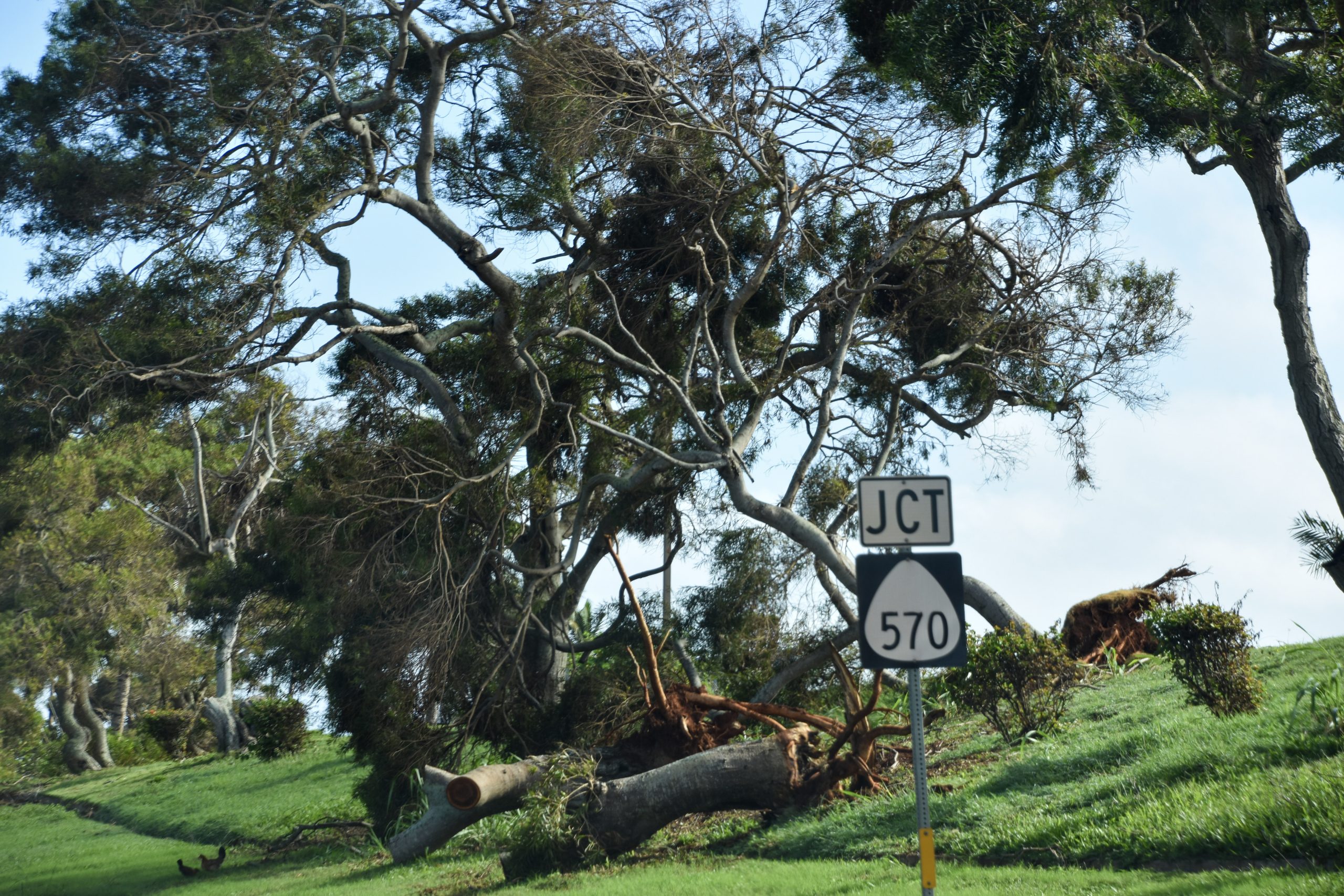
Lowell arrived on Sept. 7 as a Category 2 hurricane, with Kaua‘i and Ni‘ihau bearing the brunt of the storm. Wind gusts of up to 90 mph and more than 20 inches of rain caused widespread power and water outages, flooding, downed trees and damage to homes and buildings.
Already serving 14,000 people each month before the storm, Hawai‘i Foodbank Kaua‘i quickly mobilized to meet the growing need.
“As part of KEMA (the Kaua‘i Emergency Management Agency) and being the food relief partner here on Kaua‘i, we sat in EOC (Emergency Operations Center) and got to see upfront what the disaster looked like and how everyone responded. And the days after that, assess our communities, the situation they’re in, ‘Is it safe to go there?’” said Tisha Remigio, assistant director of Hawai‘i Foodbank Kaua‘i.
As recovery continues, families are moving forward at different paces.
“There are some folks that are almost completely recovered. They have electricity and running water, their employment is okay, so income is okay. They can go to the store, access in and out of their homes is back to normal, and we’re very happy for those people,” Wes said. “But there are some in the other extreme, whose homes were completely destroyed. They have nowhere to stay. Some are put up in hotels or vacation rentals or staying at family or friends’ homes. Those are the folks that really need our help.”
In the weeks following the storm, Hawai‘i Foodbank Kaua‘i added pop-up emergency food distributions to its regular schedule with hunger-relief partners across the island. A single distribution served as many as 500 families.
“Everybody lost food,” said Tisha. “And the numbers have quadrupled. In the first eight days, we served the same amount of people that we do in a month.”
For many families, the loss of food was compounded by lost income.
“A lot of the people who came through were affected because they’re laid off. The hotels aren’t running – they’re inoperable,” she said. “A lot of families are already living paycheck to paycheck.”
Some shared the financial toll of losing everything in their refrigerators and freezers. Tisha recalled one family saying: “There goes $800 of food in my refrigerator.”
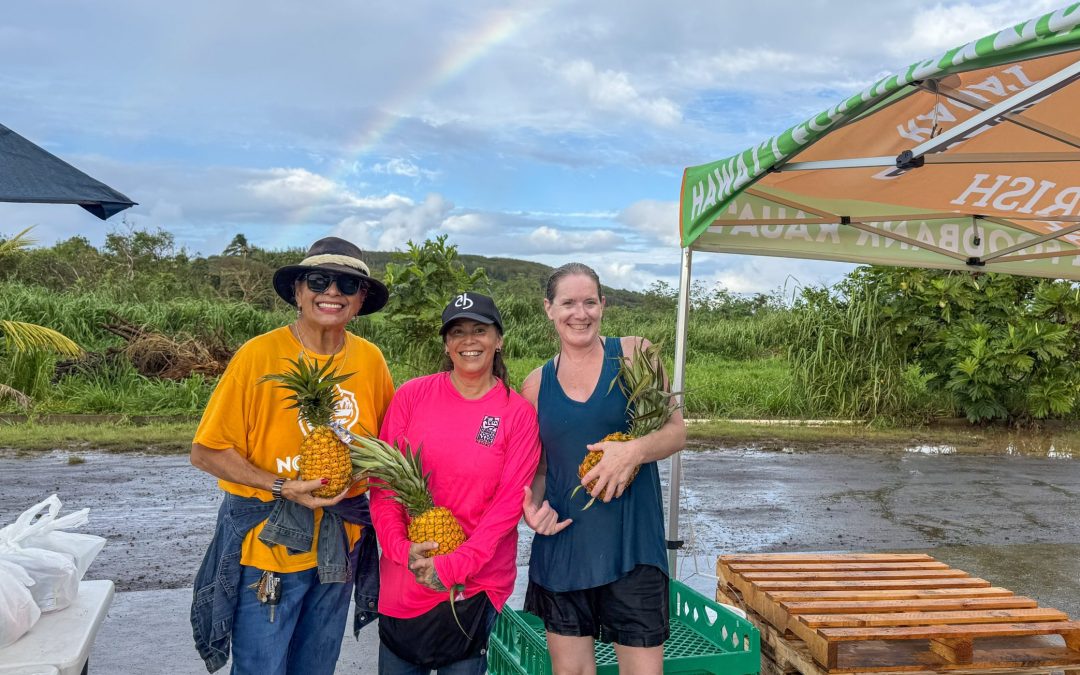
To reach North Shore neighbors, Hawai‘i Foodbank Kaua‘i brought its Mobile Food Pantry to Waipā Foundation for a pop-up distribution. Families received milk, eggs, bananas, watermelon, bread, cases of water and pantry staples, including canned proteins.
Families could also take home Survivor Daily Rations — shelf-stable meals that require no cooking and can be stored for extended periods, providing essential nourishment when power outages and other storm damage make preparing food difficult.

For many neighbors, this was their first time seeking food assistance.
“Hawai‘i Foodbank came to Waipā to help serve our community and give us fresh produce, food, whatever we need. We just got power on a couple of days ago,” shared Lyla Gonsalves, ‘āina technician at Waipā Foundation. “It’s really rewarding to see people happy and getting the food that they need — and just getting back on their feet as best they can.”
Alongside Waipā Foundation, community organizations across Kauaʻi have stepped up to help, extending the reach of the island’s hunger-relief network.
“Although we have about 65 partners out here that distribute food, there’s been many, many more that have shown up to our distributions to help our community, and we’re very appreciative of that,” Wes shared.
That support extends beyond Kauaʻi’s shores. Hawaiʻi Foodbank Kauaʻi’s statewide and national partnerships have helped bring additional food and resources to the island.
“One of the benefits of being part of Hawai‘i Foodbank is that we belong to Feeding America, a nationwide network of food banks. We also belong to the statewide network of food banks, including Maui Food Bank and the Food Basket,” explained Wes. “What that brings to the people of Kaua‘i is access. We can access resources because we have a bigger need at the moment.”
For Tisha, the response to Hurricane Lowell reflects a shared kuleana: caring for one another.
“They have a saying, you know, ‘Kaua‘i as why.’ And we just take care of each other. We take care of our grandma, our neighbors, friends, families — all as one.”
